

Why do American comic book heroes always have superpowers?
Even when they don't, they sort of do. It's almost certainly something Freudian.


I don’t know about you, but I haven’t seen the new Superman yet. My interest in superhero movies is flagging, frankly, with only the last Guardians of the Galaxy leaving a lasting recent memory of a good time at the cinema. I suspect the new series of Avengers movies will need to raise the quality considerably over the most recent cinematic offerings.
As for the DC side, I’ve only really found the Christian Bale-starring Batman movies to be enjoyable. Henry Cavill’s Superman was enjoyable, but sadly a bit two-dimensional. It takes a lot to make the “perfect” character interesting, of course, and while David Corenswet looks good, Christopher Reeve casts a long shadow over both the character and the genre.
Some time ago, I compiled my thoughts about superheroes, specifically the differences between British heroes, and those that popped up on the pages of Detective Comics and Atlas/Marvel.
Not long after I saw Superman II at the local cinema in 1980 I was handed my first ever comic book. Forever known as “the one with the hairy thing” (actually Action Comics #508), sits among a collection of my favourite comics, reminding me of a time past. The story of a bizarre Chewbacca-esque monster (possibly Kryptonian?) that makes high school students float, I read it from cover to cover almost constantly for the first few weeks, intrigued by the adverts and stories within, totally aware that it had come from America and yet strangely unaware that you didn’t go to high school in Britain.
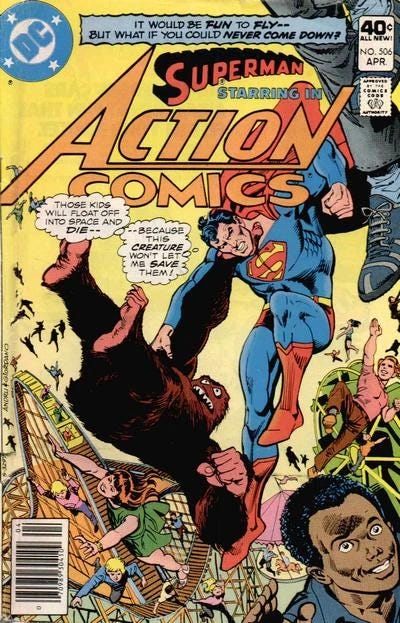
At this time in my life, Superman was the most important man in the world (after my dad and my grandad, naturally). While Doctor Who was quite grumpy, Superman felt totally real, yet I knew really that it was all fiction – albeit wonderful, imaginative and new, capable of taking me places television couldn’t.
Despite being exposed to Superman, Grease and Happy Days, I knew that you went to school, and then you went to “big” school – and that not only was it not called high school, no one wore flannel jackets or gingham dresses.
Thanks, Grange Hill!
British hero invasion
I have an uncle who is around 10 years older than me, which made him the perfect age for New Wave of British Heavy Metal and 2000AD. He seemed to dislike superheroes and X-mutant powers, preferring instead an amazing weekly comic book that carried several serial adventures, often wrapped in covers portraying the stone faced lawman, Judge Dredd.
The existence of this thing which was not an almost indestructible hero from outer space, not a wall crawling photographer, baffled me. It soon became clear that there was a lot more to comic books than Superman and his NHS-inspired diversions into fighting cigarette addiction (taking on the yellowing Nick O’Tine.)
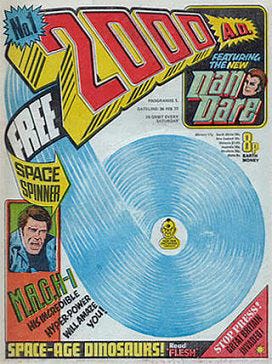
After flicking through a few issues of 2000AD (with the cheap newspaper style paper) when my uncle wasn’t looking, I couldn’t help feeling that something wasn’t right.
Being under 10, I couldn’t quite put my finger on it; it’s taken until now to come to terms with it.
The “something” was this: iconic British comic book heroes don’t have superpowers and American ones do.
It’s quite fundamental, but I’ll bet it’s something the majority of comic book fans haven’t noticed. Of course there are British characters with powers, the odd hero perhaps – and Captain Britain has been given a new lease of life thanks to Paul Cornell – but the iconic, memorable British creations such as Judge Dredd, Dan Dare or even Desperate Dan were all just regular, determined men.
Sure, Batman is nothing more than a psycho who can fight well without any special powers, and Iron Man is a guy with too much time on his hands, but these are DC and Marvel’s exceptions that prove the rule (and interestingly both are insanely rich, ridiculously smart, and in the case of Bruce Wayne, obsessively super-fit).
Dan Dare: Pilot of the Future (Present)
In the late 1980s I developed a fondness for my Dad’s expensive Dan Dare reprints and learned all about the alternative 1980s as seen from the 1950s, the one in which Earth was routinely terrorised by a floating green super villain known as The Mekon. It’s worth mentioning here that The Mekon had superintelligence and a little hover platform, not to mention every male on Venus as a member of his army. Yet superpower-free, Dan Dare and his team would thwart repeated takeover attempts with little more than a spaceship, good manners and a solid right hook.
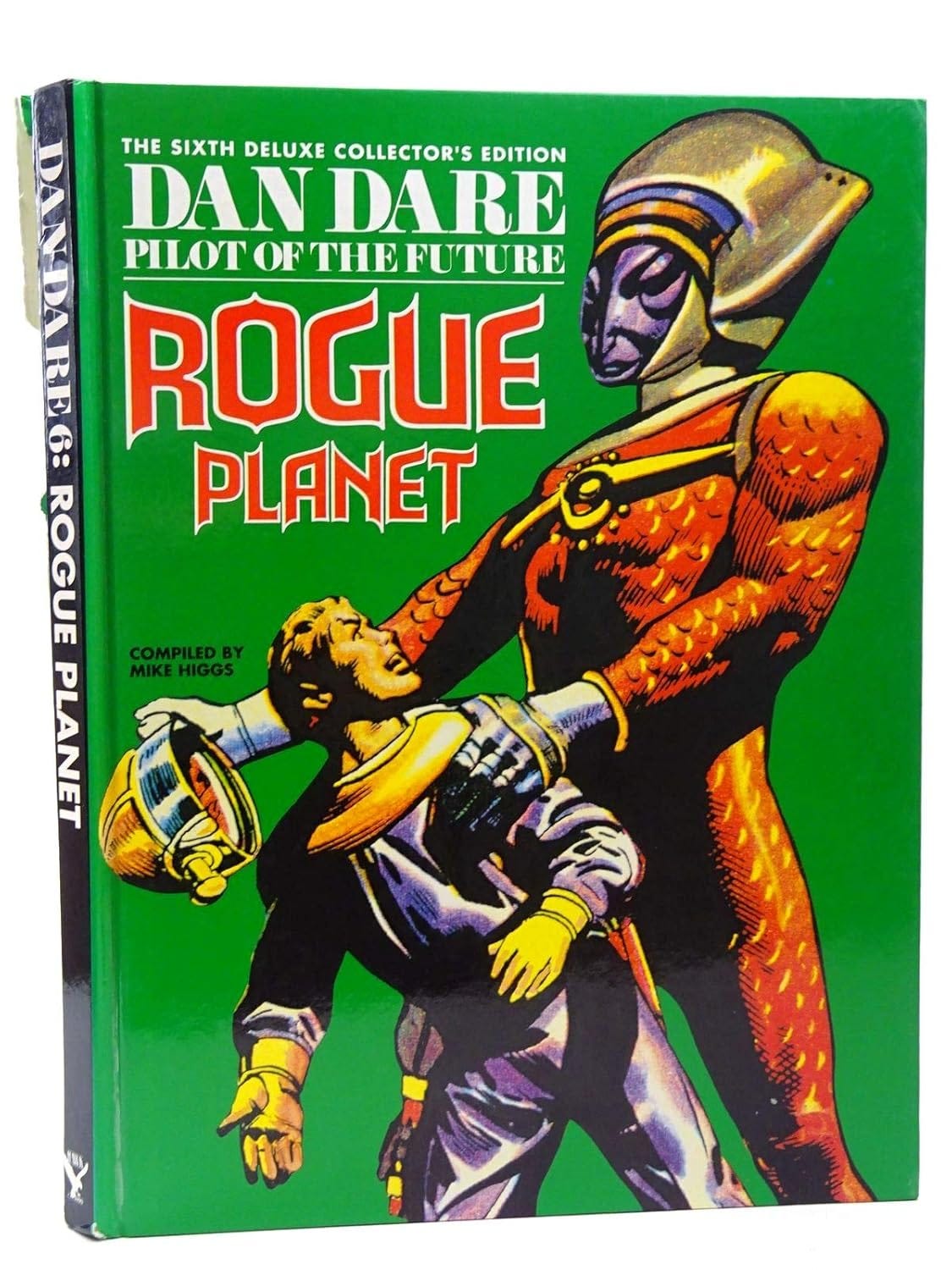
It was fun, it was honest, and the art was amazing.
Around the same time, the big US comic book publishers were revamping their major franchises – and while Marvel’s continuity was recovering from the mess of the Secret Wars and Superman was losing members of his family, Marvel UK developed yet another mutant free hero – Death’s Head.
More an anti-hero and created as a character in the British Transformers comic, Death’s Head soon spun-off into his own series with nothing but a quirky speech pattern, occasional scaling issues and a desire to complete his bounty hunting contracts. There were several incarnations of the character, each a little more violent than the previous, but Death’s Head didn’t need to read minds, create walls of ice or cast incantations.
Superiority vs. inferiority
Annual visits to the cinema over the last 10 years reveal at least one superhero movie on each occasion – the superpowers of the mutants and last sons of Krypton are well understood by the many millions worldwide who have flocked to theatres and lapped up the superpower angst of Spider-Man, The X-Men and others.
It could be said that the mutant or alien powers make the characters into heroes – meaning therefore that they have each been liberated into heroism due to the discovery of their powers. At a deeper level, however, is there something else going on?
Is the repeated creation of a jaw dropping range of superpowers and habits, pretentious hero (or mutant) names more than simple character creation? Does it in fact betray a superiority complex in US comic book writers as the world’s biggest “Super Power” throughout the 20th century?
After all, it is also true that each of the gifted heroes have superpowers; as we’ve seen, none of the British icons of comic books do, lending the flip side of this theory nicely to the idea that a British inferiority complex has dominated the creation of our comic book characters.
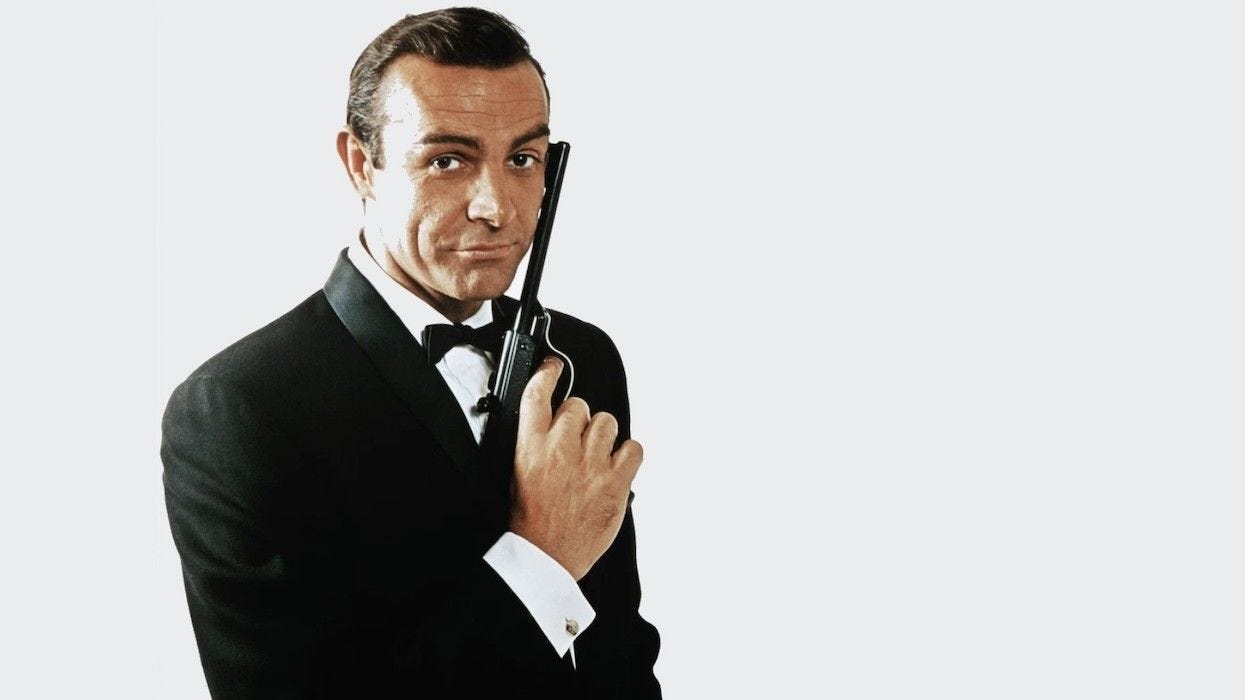
This is something that tends to extend beyond British comic books and into the wider culture. Super spy James Bond is an archetypal hero working for the Secret Service; he has no special powers outside the bedroom. Doctor Who is an archetypal alien fighting hero who has no special powers other than the ability to regenerate at the point of death, and a box to travel through time. Sherlock Holmes solved the most ingenious crimes with opiates and a sharp mind.
So why do the X-Men, Spiderman, the Fantastic Four, Superman, the Hulk and the rest of these amazing and uncanny characters need their special powers? Why can’t they be heroes without them?
Several years on, I think I’m closing in on a conclusion for this.
Clearly, the American psyche is something that has been in flux, particularly over the past 25 years. Whereas it might have been pretty solid between WW2 and Vietnam, and again post Vietnam until 9/11, since then, US culture has mined new levels of introspection. While it successfully sells everything from marine cops to retired actors investigating deaths in an exclusive apartment block, it does so with the unstated recognition that things were different, and whatever is happening now is probably not better.
As for the lack of British superpowers… well, it’s a pretension on the US side, isn’t it? The British literary tradition barely edges towards superpowers, preferring instead the supernatural. Given the strength of Frankenstein’s creation or Dracula’s metamorphoses, the British view of superpowers is quite clear.
They are monstrous.
Podcast update
Thank you for reading this week’s largely Time Lord free edition.
This weekend, after a few weeks off, our podcast is hitting the um, podwaves once again. It’s kicked off with a video-first conversation on Patreon between myself and James McLean concerning the recent noise/lack of noise surrounding Doctor Who. An audio edition will follow, and then a slightly shorter version will hit Apple Podcasts, Spotify, et al during the week.
We’d love for you to join us, and you can kick off your listening with a free trial at https://patreon.com/kasterborous